Shopping Cart


Your baby may have your eyes or your lips, but when it comes to sleep, the two of you are quite dissimilar. That’s why understanding baby REM sleep is so important. It helps you understand where they’re at in their development and how you can offer support to get your baby to sleep through the night.
Sleep might seem rather simple to you, but there's a lot more to sleep than simply being "awake" and falling "asleep." Our newborn sleep cycle chart shows the 4 different sleep phases. We’ll break this down below and offer more insights for any new or expecting parent!
Stages of Baby REM Sleep: Your Newborn Sleep Cycle Chart
Rem Sleep Cycle Stage 1 |
The initial stage we're all familiar with where you can feel yourself drifting off to sleep, but don't really feel like you've fallen asleep...like when your husband is going to sleep on the couch and you nudge him and he says, "I'M NOT SLEEPING!" |
Rem Sleep Cycle Stage 2 |
Considered the first "true sleep" stage. This is where people tend to realize, once woken up, that they had actually gone to sleep. |
Rem Sleep Cycle Stage 3 |
The deep and regenerative stage of sleep. Also known as "slow wave" sleep, this is where the body starts repairing and rejuvenating the immune system, muscle tissues, energy stores, and sparks growth and development. |
Rem Sleep Cycle Stage 4 |
REM (rapid eye movement) cycle sleep. This is where the brain starts to kick in and consolidates information and memories from the day before. It's also the stage of sleep where we do most of our dreaming. |
As you can see below, your own sleep looks much different from the newborn sleep cycle. You might be fast asleep from the moment your head hits the pillow, while it takes infants longer to drift into a deep sleep than it does for you. If your newborn won’t sleep, there’s likely more to the story than you realize.
Your baby will first enter a lengthy period of light sleep from which it is easy for him or her to awaken. It’s important that you do your part to keep them sleeping through this phase in order to reach the baby REM sleep stage.
How Long is a Newborn Sleep Cycle?
A newborn sleep cycle is notably shorter and more variable than that of an adult. While an adult typically cycles through sleep stages approximately every 90 minutes, a newborn's sleep cycle can last anywhere from 30 to 50 minutes.
This rapid cycling is due to the developmental needs of infants and their greater requirement for both REM and non-REM sleep.
During the first few months of life, newborns spend a significant portion of their sleep in REM sleep, which is vital for the extraordinary development occurring in their brains.
REM sleep is thought to support the maturation of the central nervous system and plays a critical role in learning and memory consolidation. It is during this stage that infants may exhibit twitching of the limbs or facial muscles, rapid, jerky eye movements, and even irregular breathing.
In contrast, non-REM sleep encompasses the deep, restorative sleep that allows for physical growth and cellular repair. This is the period of sleep when growth hormone is secreted and the body conserves energy.
Newborns enter non-REM sleep at the beginning of their sleep cycle, which is characterized by a reduced heart rate, slower breathing, and minimal activity. This stage of sleep is essential for the development of the immune system and overall growth.
However, the transition between these stages of sleep in newborns is not as smooth as in adults, which can lead to more frequent awakenings. These awakenings are a normal part of the sleep cycle but can be misconstrued as a sleep problem.
In reality, they are a necessary component of the infant's rapidly developing sleep architecture. As infants grow and mature, their sleep cycles will begin to lengthen and more closely resemble those of adults.
Understanding the unique characteristics of a newborn's sleep cycle can help caregivers provide the appropriate environment and support to promote healthy sleep patterns. This includes creating a safe sleep space, recognizing signs of sleepiness, and gently encouraging self-soothing techniques as the infant grows older.
By fostering an optimal sleep setting and routine, parents can help their newborns achieve the restorative sleep they need for healthy development. We’ll talk more about this in a moment. First, let’s contrast the adult and newborn sleep stages below.
The Differences Between Newborn Sleep Stages and Adult Sleep Stages
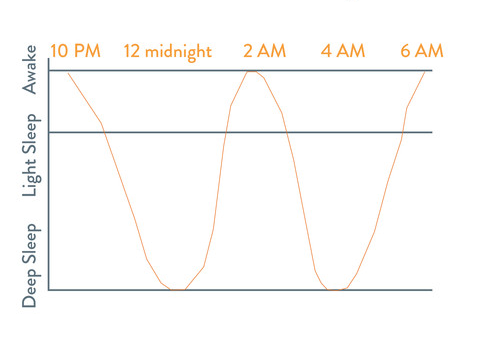
Our newborn sleep cycle chart should help you understand what’s going as your baby drifts away to dreamland. But how do newborn sleep stages differ from your own sleep stages? We’ll break it down below.
Adult Sleep Stages
Though you both cycle between periods of deep sleep and shorter stints of light REM cycle sleep, your baby does so many more times throughout the night. For you, deep sleep can persist up to 90 minutes at a time.
For your baby, it may not last an hour. Therefore, much of his or her sleep is comprised of light sleep, often accounting for more than half of their recommended 13-18 hours of shuteye.
When adults complete a sleep cycle and shift to the next cycle, we might briefly wake up or come close to waking up. The other difference between our cycles and baby's is that when we're shifting from one cycle to the next we might wake up, but we almost immediately fall back to sleep (unless affected by sleep disorders).
Think about how you’ll barely wake in the middle of the night and shift positions or open your eyes for a split second before falling asleep again.
Infants, however, will wake up during that shift and probably need your help to get back to sleep. This skill is learned, and until your baby can fall back to sleep independently, they won't be able to sleep through the night.
Though these times can vary due to factors like sleep disorders, this baby sleep chart below shows how your baby cycles through the stages of sleep much quicker than adults.
Newborn Sleep Stages

Newborns and adults have very different sleep cycles. So, how does your baby's sleep cycle work?
Our newborn sleep cycle chart shows that newborns (babies 0-3 months old), only experience two of the four stages of sleep: stage 3 and stage 4, or REM, and spend about half of their time asleep in each stage.
These are also known as active sleep and quiet sleep - this is because your baby may be more physically active during the former, and more still during the latter.
As a newborn, you were most likely able to rock or nurse your baby to sleep, and then put her down without her waking.
This is because she jumps right into that deep sleep stage. Around 4 months old, your baby will start cycling through all 4 stages of sleep, instead of just two. Learn more about the typical 4-month-old sleep schedule and the corresponding 4-month sleep regression in our blog.
From the experts“When this change takes place, our little one moves from 50% REM sleep to 25% in order to make room for those first two stages. Although REM sleep is light, it's not as light as these 2 new non-REM sleep stages that they're getting used to. With more time spent in lighter sleep, there's more of a chance that baby's going to wake up." - Rachel Turner, Certified Sleep Consultant |
As you can imagine, your baby’s sleep is most vulnerable when he or she is in light sleep.
Any number of things can cause them to awaken, including hunger, a wet diaper, changes in temperature, an unfamiliar sound, or his or her own startle reflex or moro reflex.
Of course, if all is well and your baby is comfortable, he or she might fall asleep again within a few minutes.
A reassuring hand or your presence can always help them through this vulnerable period without waking. The Zen Weighted Swaddle blanket mimics your reassuring touch to provide uninterrupted comfort and help them sleep through minor disruptions. It’s the #1 infant sleep aid on the market - and is widely considered to be the best swaddle for baby who hates swaddles.
We also have other types of swaddles, such as our zipper swaddle, transitional swaddle, or bamboo fabric swaddle. And when it comes time to stop using a swaddle, you can count on us to ease the swaddle transition with our weighted sleep sack lineup as well!
From the best sleep sack for winter to best transitional sleep sack, you can easily reap the benefits of sleep sacks with our products. They’ll help baby sleep better fast!
 Sweeter Sleep Story“This swaddle is a sanity saver. I ordered it for my 2 month old daughter after trying traditional swaddles and sleep sacks and not being all that satisfied. Within days of using the Zen Swaddle she went from waking up every 2-3 hours to sleeping 6-8 at night. It's amazing!" - Tasha K., 4/20/2018 |
While the transition between sleep phases can lead to a harrowing night, this light REM sleep is essential for physiological development, physical well-being and safety. It has even been linked to increased blood flow to the brain, learning and height. Therefore, uninterrupted baby REM sleep has many benefits.
How the Newborn Sleep Cycle Progresses as Your Baby Ages
As your baby grows older, they will experience less rem sleep and will instead go through an increased amount of non REM sleep cycles. They will also begin to experience 3 stages of non rem sleep, instead of just one. This is all part of slowly transitioning into an adult sleep cycle.
Most babies begin to approximate more adult sleep patterns between three months and one year of age. During this time of life, babies begin to sleep for longer periods during the night and shorter periods during the day.
By six months old, babies begin to link sleep cycles. But the process may start earlier. By 3 months, babies develop night and day sleep patterns, and they tend to start to sleep more during the night. Babies usually sleep for 12-15 hours every 24 hours. At 3-6 months, babies might start moving towards sleep patterns of 2-3 daytime sleeps of up to two hours each.
By four months, most babies’ sleep cycles start to lengthen, and they may begin to show a preference for longer sleep at night. By six months, some babies may begin to ‘sleep through the night’—meaning that they may go for five to six hours or more without waking up to feed.
Tips on Maintaining the Proper Newborn Sleep Cycle
Newborns express their need to fall asleep by giving several cues; some fuss or cry while some might indicate with gestures such as rubbing their eyes.
Experts say it is best to put babies to bed when they are drowsy but not asleep. That way they are more likely to fall asleep quickly and eventually learn how to get themselves to sleep.
Newborns can be taught the difference between day and night by limiting the activity levels, surrounding light and noise levels as night time approaches and they need to drift off to sleep.
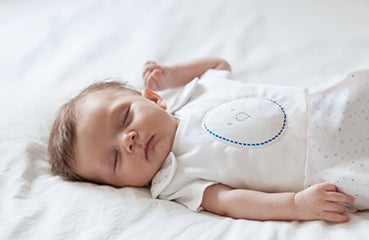
Some tips to help your baby go to sleep are as follows:
- Observe your baby's sleep patterns and signs of sleepiness
- Place your baby in the crib when drowsy not sleepy
- Place baby to sleep on his or her back in your favorite swaddle blanket or wearable sleeping bag.
- To ensure a safe sleep environment for your baby remove loose blankets or soft items near the baby's face or head
- Add white noise to help your baby fall asleep to familiar sounds in the womb
Struggling to maintain a consistent newborn sleep schedule or baby nap schedule? We have more tips on how to put a baby to sleep fast in our blog - such as how to get baby to nap longer, when to start sleep training, how to get baby to sleep through the night, how to dress your baby for sleep, how to swaddle a baby, and more.
Wrapping Up Our Guide to Baby REM Sleep and the Need for a Newborn Sleep Cycle Chart
That concludes our guide to baby REM sleep. We hope these insights alongside our newborn sleep cycle chart have answered your questions surrounding baby sleep stages. Remember - of the 4 various stages, it’s important to ensure your child gets adequate REM sleep, which occurs in stages 3 and 4.
You can learn more about the path ahead as a new parent in our blog with articles like how to help teething baby sleep, separation anxiety in babies, setting up a newborn bedtime routine, how to hold a newborn, how to help baby roll over, baby cries meaning, signs of sleep regression, when to stop using sleep sack, and more.
At this point, though, it’s time you invested in better sleep for you and your child at Nested Bean. The best baby sleepwear is just a few clicks away - from the best baby pajamas to the best transition swaddle, best swaddle for summer, and more.
Don’t let early parenthood leave you feeling drained. Face each day with a renewed sense of vigor by prioritizing healthy sleep with the help of Nested Bean!